

Most property owners meet the ACP-5 the same way: a filing representative says the Department of Buildings will not release the permit without one, and nobody in the room can say exactly what it is. The form is short. The rules around it are not, and the two places people get caught are which form their job actually needs and which box on it has to be checked.
Here is what the ACP-5 is, who is allowed to sign it, when your job needs an ACP-7 instead, and what stops a filing from clearing.
What is an ACP-5 form in NYC?
An ACP-5 is the Asbestos Assessment Report that a New York City DEP-certified asbestos investigator completes, signs and seals to record that the work you are permitting will not disturb asbestos-containing material.
The New York City Department of Environmental Protection places the responsibility on the building owner, not the contractor, to have a DEP-certified asbestos investigator carry out an asbestos survey before work begins. The investigator decides what the survey shows, and only then can the form be issued. It is filed with DEP under 15 RCNY section 1-22(b)(1), and the Department of Buildings treats it as a precondition of the permit rather than a formality attached to it.
According to DEP, an investigator can issue an ACP-5 on any one of these grounds:
- The building, or the portion of it affected by the work, is free of asbestos-containing material.
- Asbestos-containing material is present, but the work will not disturb it.
- The amount of asbestos-containing material to be abated is small enough to count as a minor project.
- The activity is exempt, under the list at 15 RCNY section 1-23(b)(1) through (3).
Those four grounds are not interchangeable, and the difference between them matters later. An ACP-5 issued because asbestos is present but undisturbed is a valid form. It is not a statement that the building is clean.
Who can sign an ACP-5, and what they file first
An ACP-5 can only be signed and sealed by an asbestos investigator certified by NYC DEP. That is a specific certification issued by the city, not a general environmental or engineering credential, and it is the reason a survey report from an unqualified inspector cannot be converted into a filed form after the fact.
In practice that means the investigator you hire should already be registered with DEP before your permit clock starts. If you are still comparing firms, what an asbestos inspection costs in NYC sets out the ranges and what moves them.
Do you need an ACP-5 or an ACP-7?
You need an ACP-7 rather than an ACP-5 when the work will disturb more than 25 linear feet or more than 10 square feet of asbestos-containing material, which is the threshold at which DEP classifies the job as an asbestos project.
That single measurement decides the whole path your project takes, and it is the number most owners have never been told. Below it, an investigator can carry the work on an ACP-5 as a minor project. Above it, the job becomes an asbestos project and a different form applies, filed by a different party, on a different timetable.
The ACP-7 is the Asbestos Project Notification. DEP requires the building owner or an authorized agent to submit it through the Asbestos Reporting and Tracking System at least one week before the work starts, along with the filing fee set out at 15 RCNY section 1-25. An ACP-7 is valid for one year from the original date of filing. If anything about the project changes after filing, DEP requires the deviation to be reported immediately on an ACP-8.
So the decision runs in this order:
- A DEP-certified asbestos investigator surveys the area the work will affect.
- If no asbestos-containing material is present, the investigator files an ACP-5.
- If asbestos-containing material is present but the work will not touch it, the investigator files an ACP-5 recording that.
- If the work will disturb asbestos-containing material at or under 25 linear feet and 10 square feet, it is a minor project and can be carried on an ACP-5.
- If the work will disturb more than 25 linear feet or more than 10 square feet, it is an asbestos project. The owner files an ACP-7 in ARTS at least a week ahead, with the fee.
A phased job can land on both. A gut renovation might produce an ACP-7 for the floor where pipe insulation is coming out and an ACP-5 for the floors where nothing is being touched. The forms follow the work, not the address.
The practical consequence of the threshold is a scheduling one. An ACP-5 turns on how quickly your investigator can survey and get lab results back. An ACP-7 adds a fixed week of notice to DEP on top of that, and that week cannot be compressed by paying for faster lab work. If your survey comes back over the threshold and nobody planned for the notification period, the schedule moves. Reading how to read your asbestos test results before the report lands makes that conversation shorter.
NYC ACP-5 filings
Your permit needs an ACP-5 from a DEP-certified investigator.
UNYSE has tested and cleared New York buildings since 1993. Send us your scope and permit timeline.
What actually holds an ACP-5 up
Most ACP-5 delay is administrative, and it happens before anyone looks at your building. The common assumption is that timing depends on how fast the laboratory turns bulk samples around. Lab time is real, but it is rarely the part that slips.
DEP’s filing process has a paper gate sitting in front of an electronic system. The Statement of Agreement has to carry original signatures, dates and seal, and it travels by mail or hand delivery. Where the investigator is employed by a company holding a NYSDOL Asbestos Handling License, the company’s letter of authorization has to arrive with it. DEP reviews that package, and only after it is accepted does the temporary password and filing link go out by email. An investigator who has never filed on your behalf before is starting that sequence from the beginning.
The way to protect a schedule is to settle two questions when you hire, before any sampling is booked: is this investigator already registered with DEP to file, and has the scope of work been described precisely enough that the survey covers every area the permit touches. A survey scoped to the wrong rooms produces a valid form for the wrong job.
The box that decides whether your demolition permit is issued
An ACP-5 is not a certificate that your building is asbestos-free, and treating it as one is the single most expensive misreading of this form. The distinction becomes concrete the moment a full demolition is involved.
The Department of Buildings will only issue a full demolition permit on an ACP-5 issued by a DEP-certified asbestos investigator with box 8d checked. Box 8d is the one that states the entire building is free of asbestos-containing material. An ACP-5 issued on either of the other grounds, asbestos present but undisturbed, or a minor project, is a valid filing that will not carry a full demolition permit, because it does not say what 8d says.
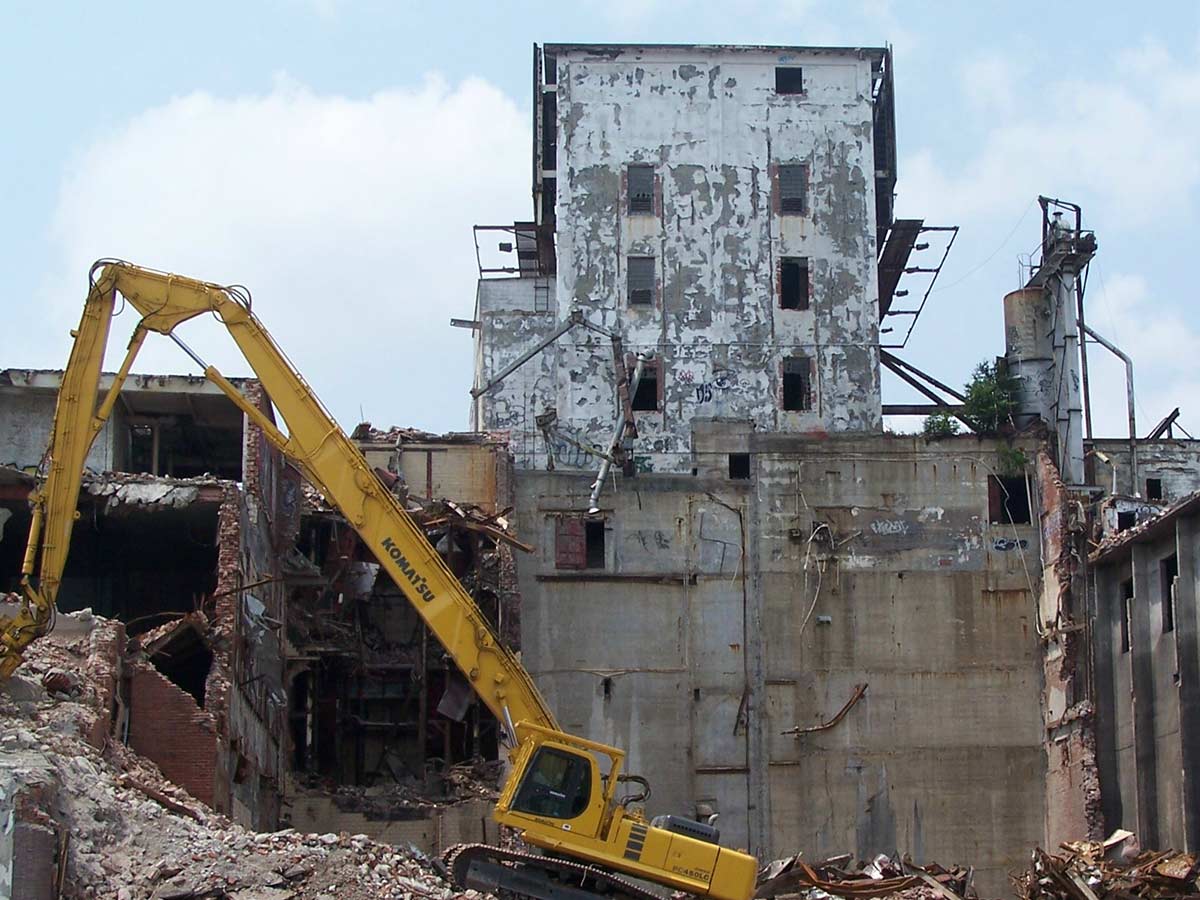
The second half of that rule is the part that surprises people who have already done the work. DEP states that an Asbestos Project Completion form, the ACP-21, or an Asbestos Project Conditional Completion form, the ACP-20, will not be accepted as the basis for issuing a full building demolition permit. An owner who has paid for abatement, passed air monitoring and clearance testing, holds the completion paperwork and assumes the building is now cleared for demolition is holding the wrong document. DEP names only three exceptions: a concurrent demolition and Asbestos Technical Review Unit permitted project, an immediate emergency demolition, and an emergency demolition.
In practice, that means the question to ask your investigator is not whether you will get an ACP-5. It is which of the four grounds your building qualifies under, and whether that ground supports the permit you are actually applying for. Those are different questions, and only the second one keeps a demolition on schedule.
What triggers an A-TRU review
An Asbestos Technical Review Unit permit applies to more complex abatement work, and it requires workplace safety plans and tenant protection plans prepared by a registered design professional and approved by DEP before abatement starts. It attaches to the ACP-7, not the ACP-5.
DEP screens questions 28 and 29 on the ACP-7 for keywords that suggest a project needs A-TRU review. DEP publishes the list of the most common triggers, and it is worth reading before you describe your scope of work, because how the work is written up decides whether a clarification request comes back:
- Building elements: section of floor, entire floor, building component, columns, risers, ceilings.
- Circulation and egress: corridor, foyer, lobby, passageway, vestibule, stairs, stairwell landing, fire escape, exit door, ground floor.
- Fire protection: fire alarm system components, fire dampers, fire doors, fire stopping materials.
- Elevators: elevator doors.
None of these words are forbidden. They signal to DEP that the abatement may affect shared or life-safety systems, which is what A-TRU exists to review. Knowing what asbestos-containing material tends to look like in these locations helps at survey stage, and what asbestos looks like in a New York building covers the common ones.
Frequently asked questions about the ACP-5
What is an ACP-5 in NYC?
An ACP-5 is the Asbestos Assessment Report a DEP-certified asbestos investigator files with New York City to record that permitted work will not disturb asbestos-containing material.
What is the difference between an ACP-5 and an ACP-7?
An ACP-5 is an assessment filed by a DEP-certified asbestos investigator saying the work will not disturb asbestos, or will disturb only a minor amount. An ACP-7 is a project notification filed by the building owner when work will disturb more than 25 linear feet or more than 10 square feet of asbestos-containing material. The ACP-7 carries a fee and one week of advance notice to DEP.
Can a property owner file an ACP-5 themselves?
A property owner cannot sign an ACP-5. DEP requires the form to be completed, signed and sealed by an asbestos investigator the city has certified, and the owner’s responsibility is to arrange for that investigator to carry out the survey. The two roles are separate on purpose, because the form is a professional attestation about what is in the building rather than a declaration by the person who benefits from the permit. There is an administrative step ahead of it as well. Before an investigator can file electronically at all, DEP has to receive and accept a Statement of Agreement bearing original signatures, dates and seal, plus a letter of authorization where the investigator is employed by a company holding a New York State Department of Labor Asbestos Handling License. Owners who plan to hand this to whoever is cheapest and fastest often find the filing credentials are the constraint, not the survey.
Does an ACP-5 mean the building is asbestos-free?
No. An ACP-5 can be issued because asbestos is present but will not be disturbed, or because the amount being abated counts as a minor project. Only an ACP-5 with box 8d checked states that the entire building is free of asbestos-containing material, and that is the version the Department of Buildings requires before it will issue a full demolition permit.
What happens if the survey finds asbestos?
Finding asbestos does not stop a project. If the work can be designed so the material is not disturbed, the investigator can still issue an ACP-5 on that basis. If the material has to come out, the quantity decides the route: at or under the 25 linear feet and 10 square feet thresholds it is a minor project, and above them it becomes an asbestos project requiring an ACP-7, licensed abatement and clearance before the space goes back into use.
What to do next
If you have a permit application in progress, the next step is to have a DEP-certified asbestos investigator survey the areas the work will affect, and to ask which of the four grounds your building will qualify under before the form is filed. If a full demolition is involved, say so at the start, because box 8d has a higher bar than the rest of the form.
UNYSE has been doing this work in New York since 1993, and our team includes the NYC DEP-certified investigators the rule requires. You can see how we handle asbestos testing in New York City, or send us your scope and permit timeline and we will tell you which filing your job needs.
About the author
This article was written by Andrew J. McLellan, President and Founder of Environmental Education Associates, UNYSE’s sister company. He has overseen environmental safety training and consulting in New York since 1992, working alongside UNYSE’s team of 20 or more certified professionals. UNYSE Environmental Consultants has tested, guided and cleared New York buildings since 1993, and its investigators hold the NYC DEP certification the ACP-5 rule requires. Learn more about the UNYSE team here.
Sources: New York City Department of Environmental Protection, Asbestos Abatement Forms, retrieved 11 September 2026. Rules of the City of New York, Title 15, sections 1-22, 1-23 and 1-25. This article explains published filing requirements and is not legal advice. Requirements change, so confirm current rules with DEP or your certified investigator before filing.